MAY 2026
Auren’s Deli and The Practice of Reciprocity
WORDS BY DOMINIC ASHBY
PHOTOGRAPHY BY JOHANNA HVIDTVED
The expectations of the third space are diffuse. Last week, I witnessed firsthand the most egregious misuse of this: a coffee shop co-opted into a free storage closet. Usually third spaces are places of unabashed revelry. They harbour a vibrating and necessary underscore for people far and wide, providing instrumental nourishment to neighbourhoods, cities, and broader communities. But demonstrated there in the coffee shop was an acute misconception of what these places should do for us, and what we should do for them.
Generally speaking, restaurants tend to bend to the whims of Instagram and TikTok, and cafés have been co-opted into cacophonous co-working spaces rampant with Zoom meetings and evidently suitcase storages. We have contravened the essence of what the third space is for: connection and convalescence. We need these now more than ever. Henry Stevens and Pernille Rosenbæk understand this intuitively.
We have contravened the essence of what the third space is for: connection and convalescence.
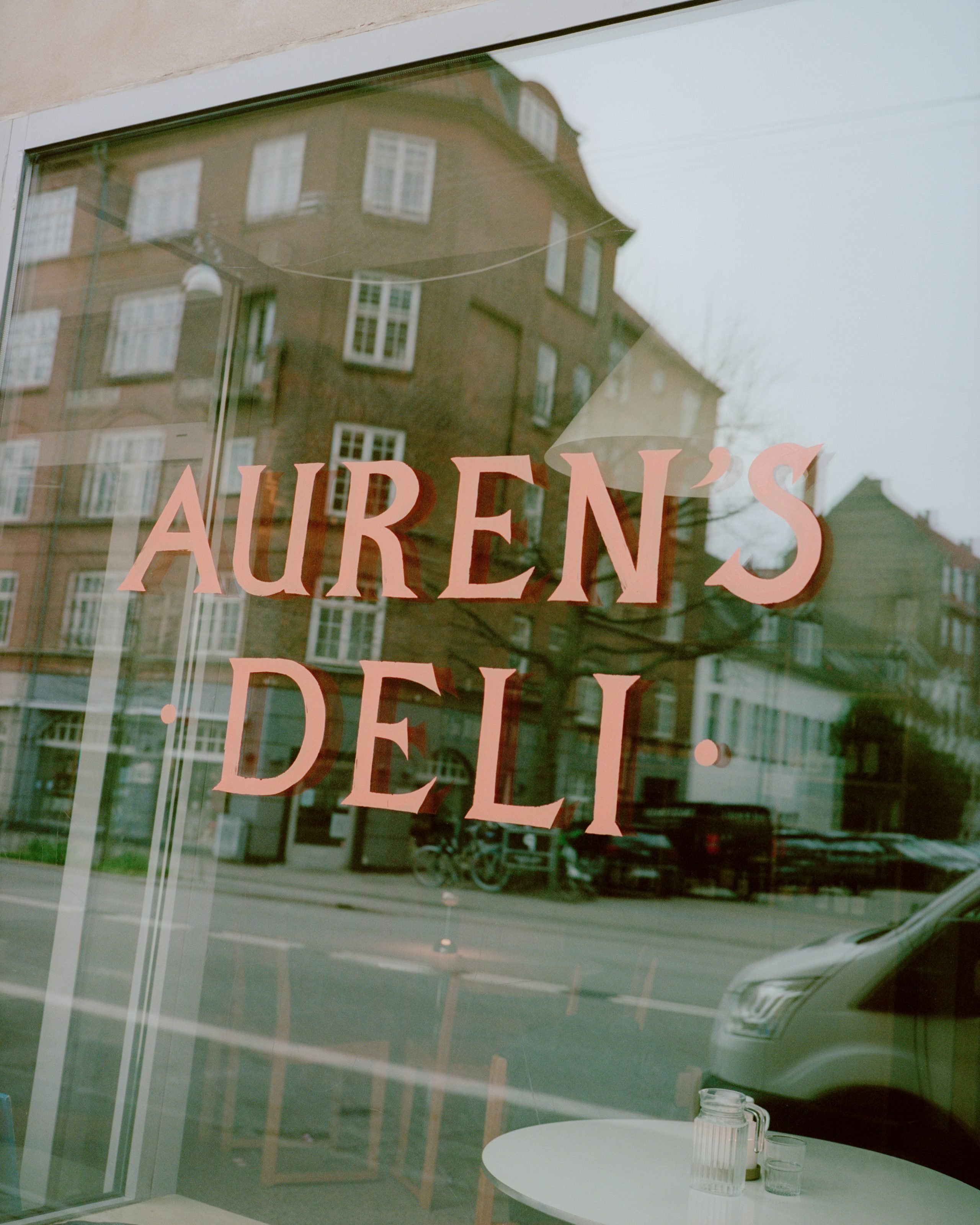
What should be squeezed from, and returned back to, third spaces is everything that ekes through the textured walls of The Deli, an establishment so wholly connected to its community in Frederiksberg, Copenhagen that it’s often challenging to find a seat inside. And that’s fine. Sit outside on their long benches for a while. Watch the traffic and the dogs and the people go by on Godthåbsvej. Grab a seasonal soda, and enjoy the lilting jazz or masterful folk wafting from the wood-lined Condesa mixer resting indoors.
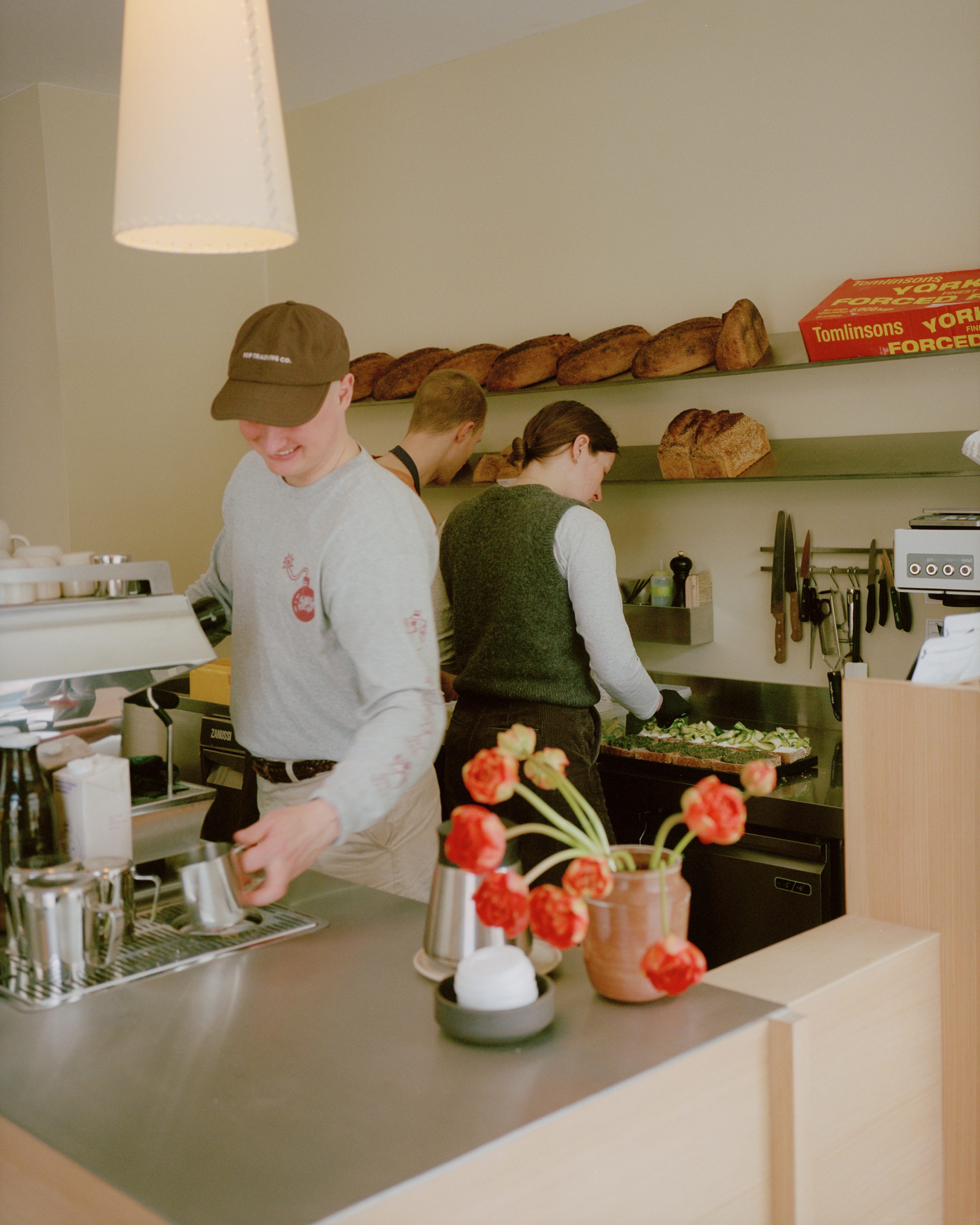
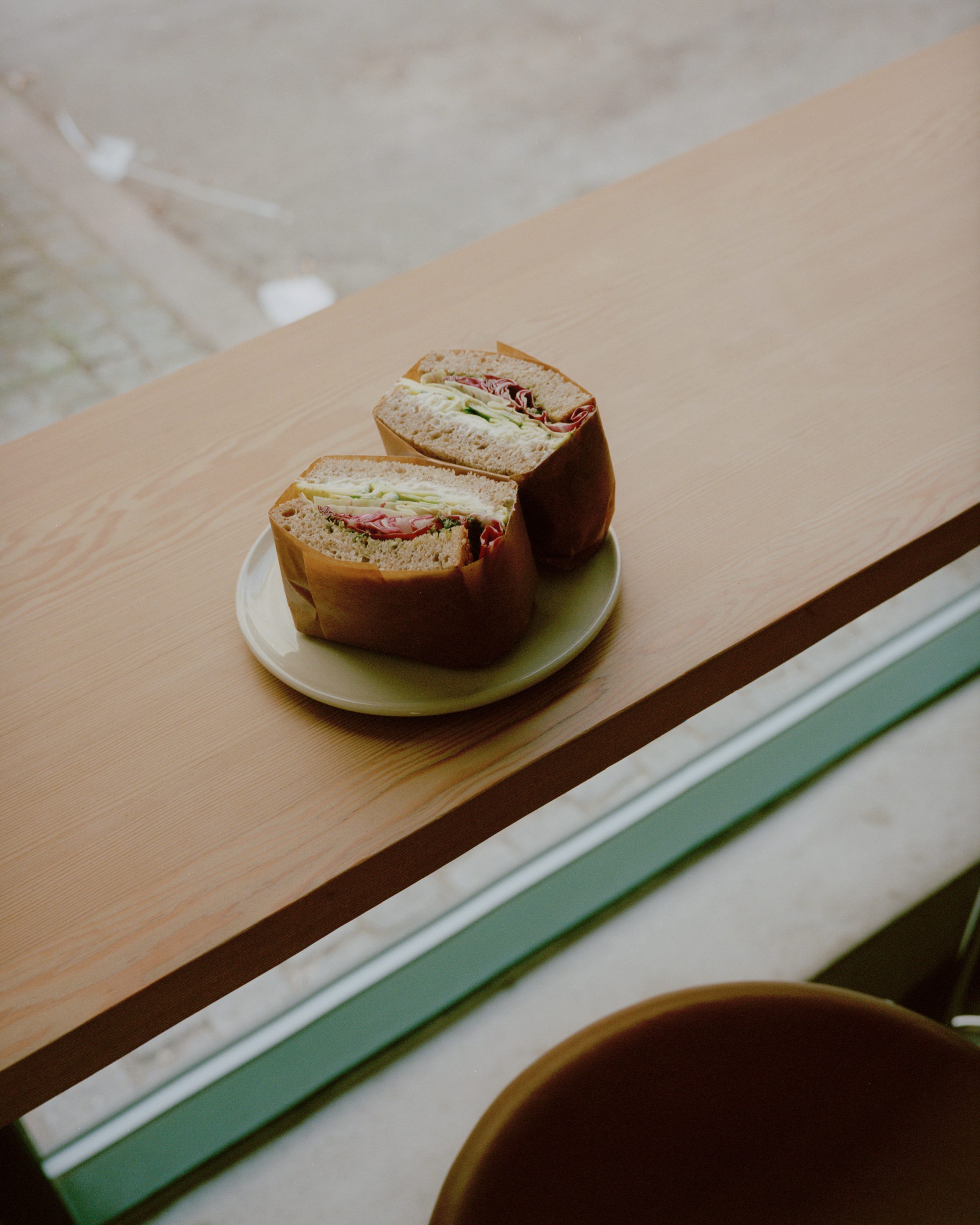
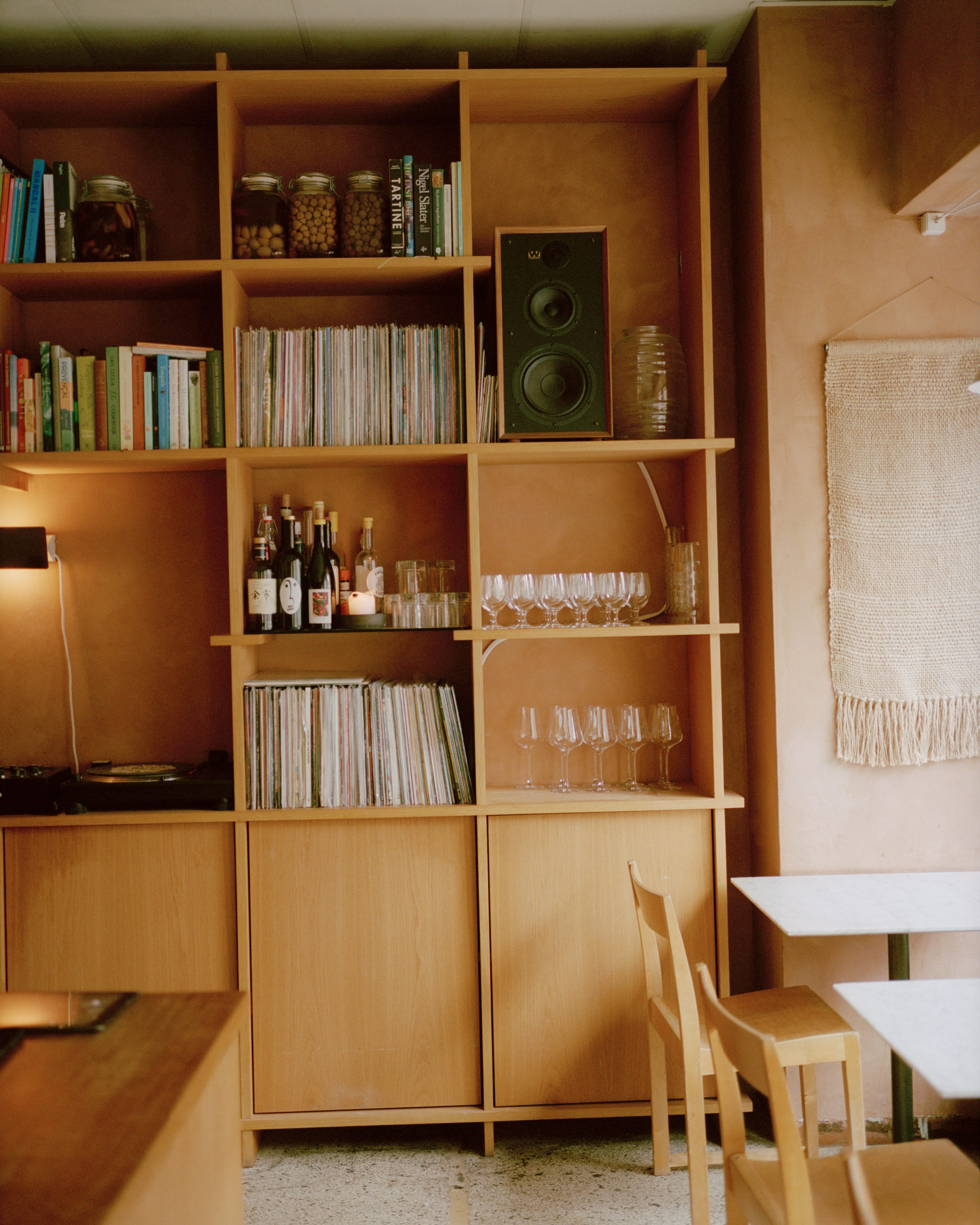
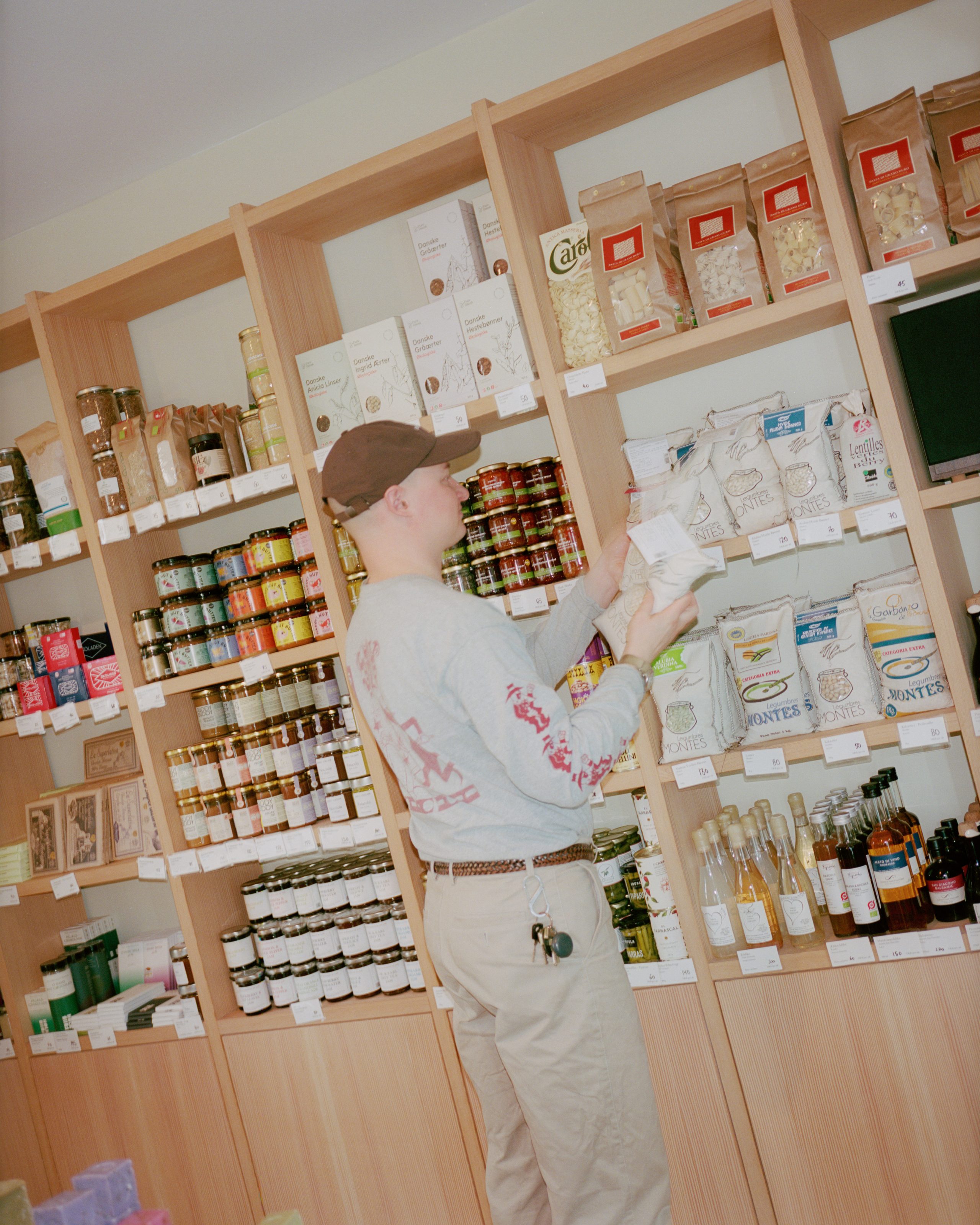
Auren’s Deli opened as an amalgamation of forms in 2022. It combined elements of a grocery store with a wine shop, listening bar, brunch, lunch, and dinner restaurant. Today, the latter elements remain, while the curated shop selections migrated and transformed into a separate space, Auren’s Cornerstore. When the cornerstore opened at the end of 2025, the original deli fused into a unitary dining room, absorbing the residual wooden shelving, and took on a new life of its own.
Auren’s Deli indeed occupies a third domain. It is visually alluring and decidedly functional. The space encourages contrasting preferences; you can come for whatever suits you. Whether that be a glass of wine, a cup of Koppi coffee, or a long Sunday lunch, all are welcome. Co-owner Henry Stevens emphatically highlights the openness that fuels this plurality. “Rather than [be] this mysterious place, we've really tried to be as transparent as possible. [It] has created this feeling that if it's your first time in the space, you walk in and you feel like it's a home of sorts, a second home.”
You can come for whatever suits you. Whether that be a glass of wine, a cup of Koppi coffee, or a long Sunday lunch, all are welcome.
Personally, that feeling adds a new tone of colour to my day. Auren’s Deli is a space I can sit down in—and really sit. Laptops are discouraged during busy periods. And you understand from the tall shelves of vinyl that it is a place to listen to, not to host your teleconference from. There is a gentle inference, small reminders: this is a space for everyone, including those who work there.
A marking characteristic of the reciprocity here is the service that persists: never overplayed, always warm and coaxing, and often deeply humorous. That being said, Henry Stevens is an exacting hand. There is a level here that goes beyond wine bar indifference and takes the guest, the neighbour, and the eccentrics like myself, with an open palm. There’s a tenacity to him, a palpable excitement in the project: “We knew as long as we had conviction and really believed in what we were doing, no matter what we were doing, it would survive.”
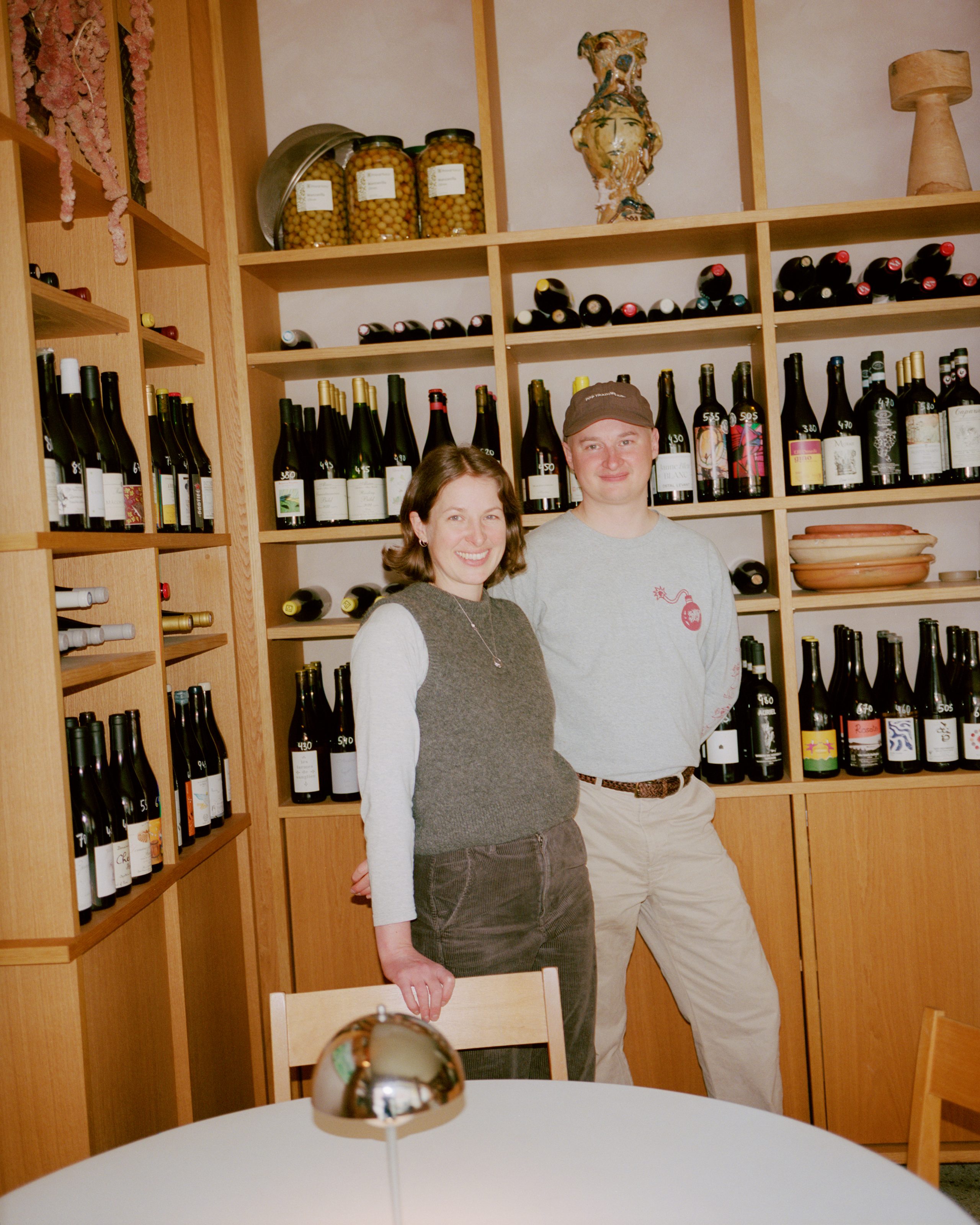
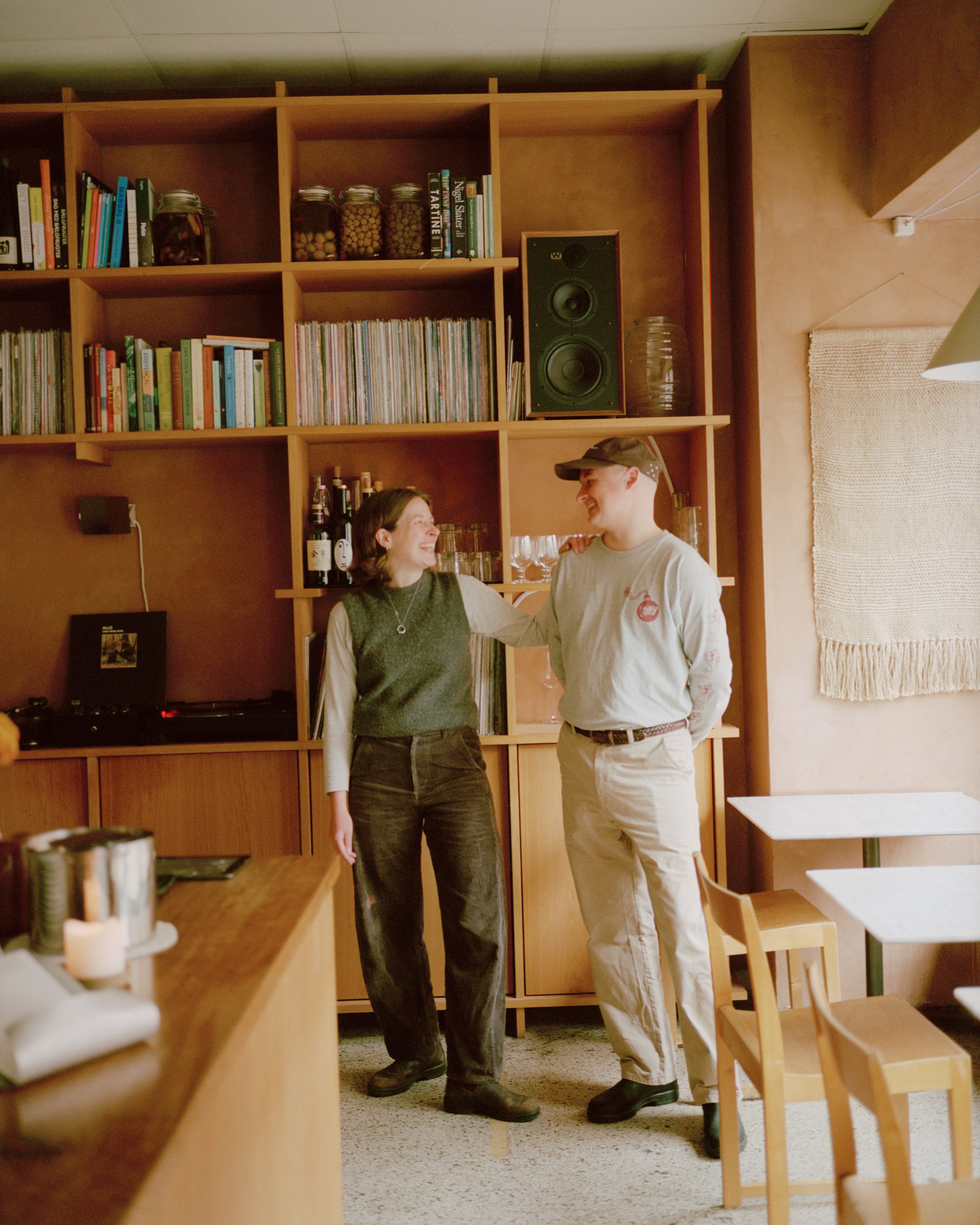
Co-owner Henry graced the floors of several hospitality stalwarts in the UK and Copenhagen during his days in fine dining. His soft, tailored approach to service leaves ample space for the guest, while underscoring the ethos of The Deli. Co-owner Pernille, contrastingly, leverages her visual arts background and draws upon her upbringing from the countryside of Jutland. Genial energy is in her blood and her eagle-eye places her front and centre. “Pernille is basically the engine room for the entire business itself,” Henry beams.
Henry proffers brimming English affability, a wealth of technical prowess, and strives to add a dash of his homeland. “I think we were taking this kind of English pub community feel where you really could show up as anything, for anything. You could show up, have a bad day, a great day. You could show up because you want to talk to the staff or you want to meet someone there, or you could show up by yourself. We really wanted to create a habitat where all of these could co-exist together.”
The concept for Auren’s Deli began its gestation when Henry took a break from the unyielding walls of fine dining. Turning a patch of dirt in Kirke Hyllinge (a town in the Danish countryside) and procuring coveted tomatoes, squash, and other heirlooms for a prominent city wine establishment prompted a redirection. Henry slowly began to see their vision materialise. “I think that unwinding period and decoupling from the intensity of fine dining took some time. [It] took six months, a lot of soul-searching, a lot of ‘who am I outside of my job?’”
“I think that unwinding period and decoupling from the intensity of fine dining took some time. [It] took six months, a lot of soul-searching, a lot of ‘who am I outside of my job?’”
Many of their products were prepped and served by Henry and his colleagues’ own hands during service. After witnessing this direct farm-to-table approach, Henry and Pernille sought a space to call their own. They wanted to rebrand the concept of hospitality in the city, and craft an intentional experience in a focal space.
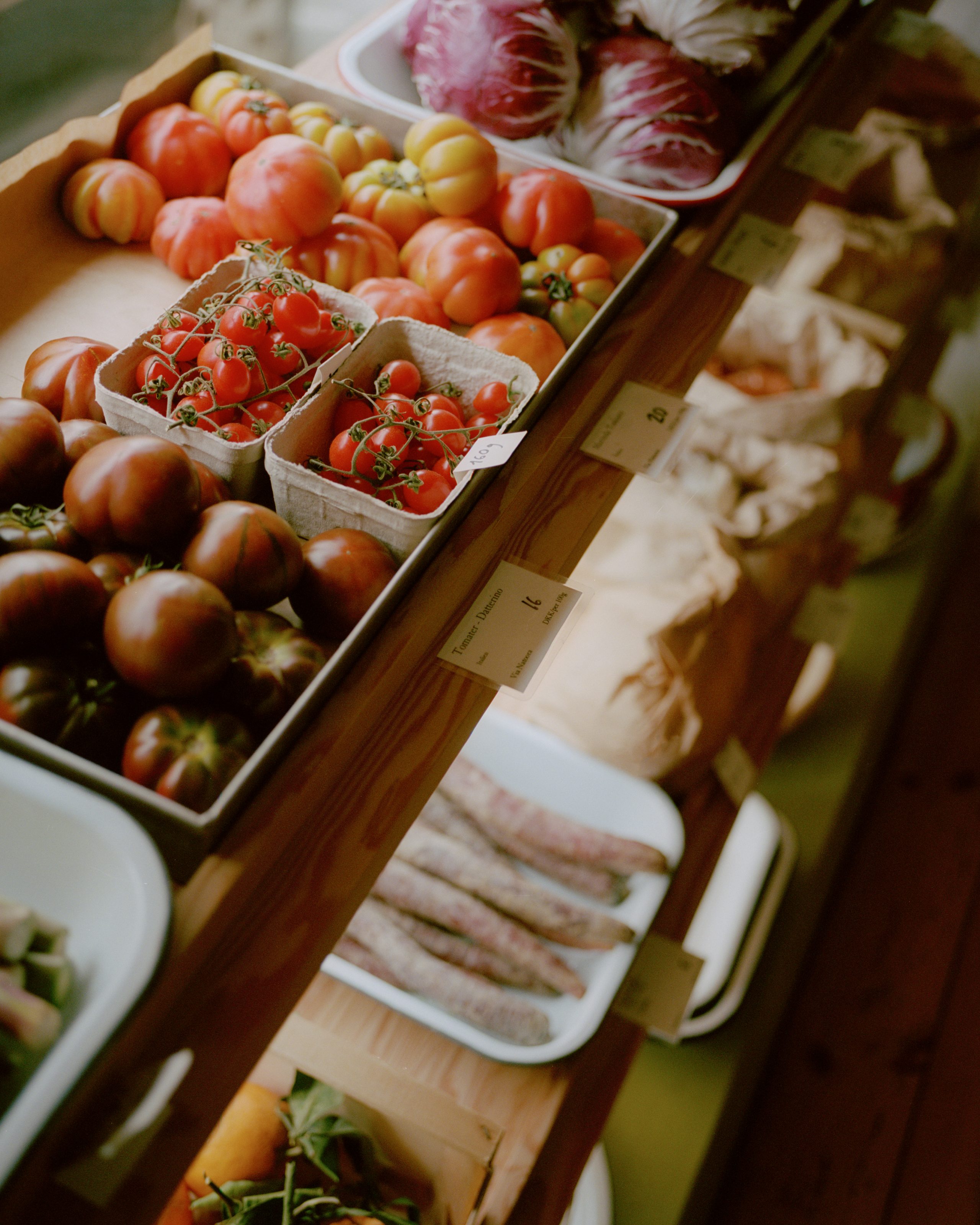
Auren’s Cornerstore, just a trot down the road from its deli, maintains the approachability the duo worked so hard to cultivate while giving breathing room for browsing. By keeping the two locales in proximity to one another, Henry and Pernille intuitively propagate their hospitality purview—a symbiotic relationship is already taking root. “Wouldn't it be nice to see a member of staff walking over with a tray full of sandwiches from one to the other?” Henry muses. Given their prestige and inclusivity, regulars will have no problem following a staff member, from lunch, to weekly shopping, and back again for aperitivo—a natural circuit easy to navigate once guests feel the loop’s intuitiveness. “Now we have a space where we can really give the energy, give the right feeling to the shop,” Henry notes. “It will still be the creative engine room for what we have going on in the dining room.”
Henry and Pernille are inherently candid individuals. Being so, they bring out the candor and a mutual ratification of what is possible at Auren’s from the guests themselves. The deli encourages reciprocal hospitality. Third spaces are two-way streets. Guests must take a moment to understand, a small breath at the door, an implicit act in most spaces. The duties of both parties in this third-space relationship are intentionally ambiguous. “It is a shared experience between us and the guests,” Henry highlights, “where they see us, and we see them.”
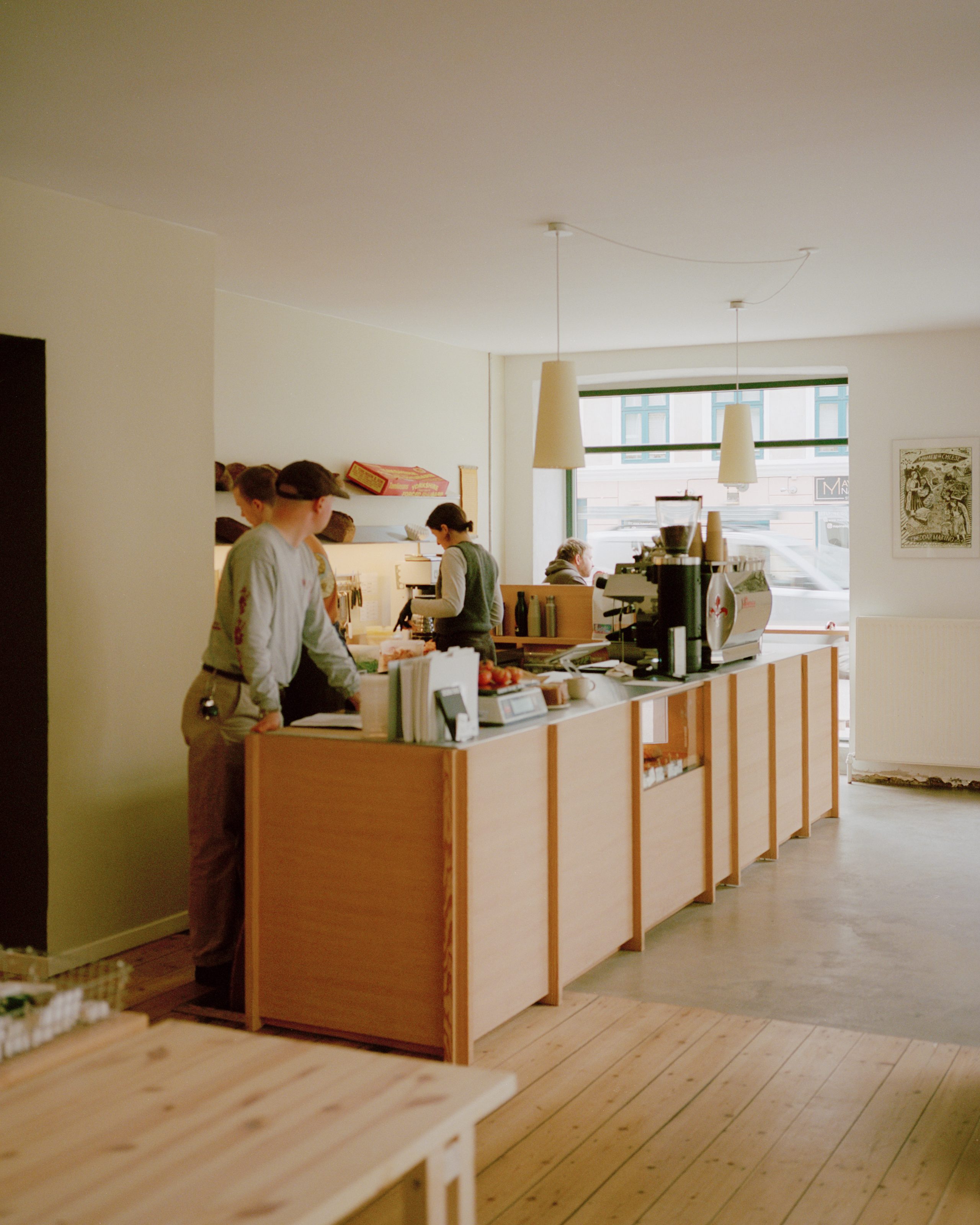
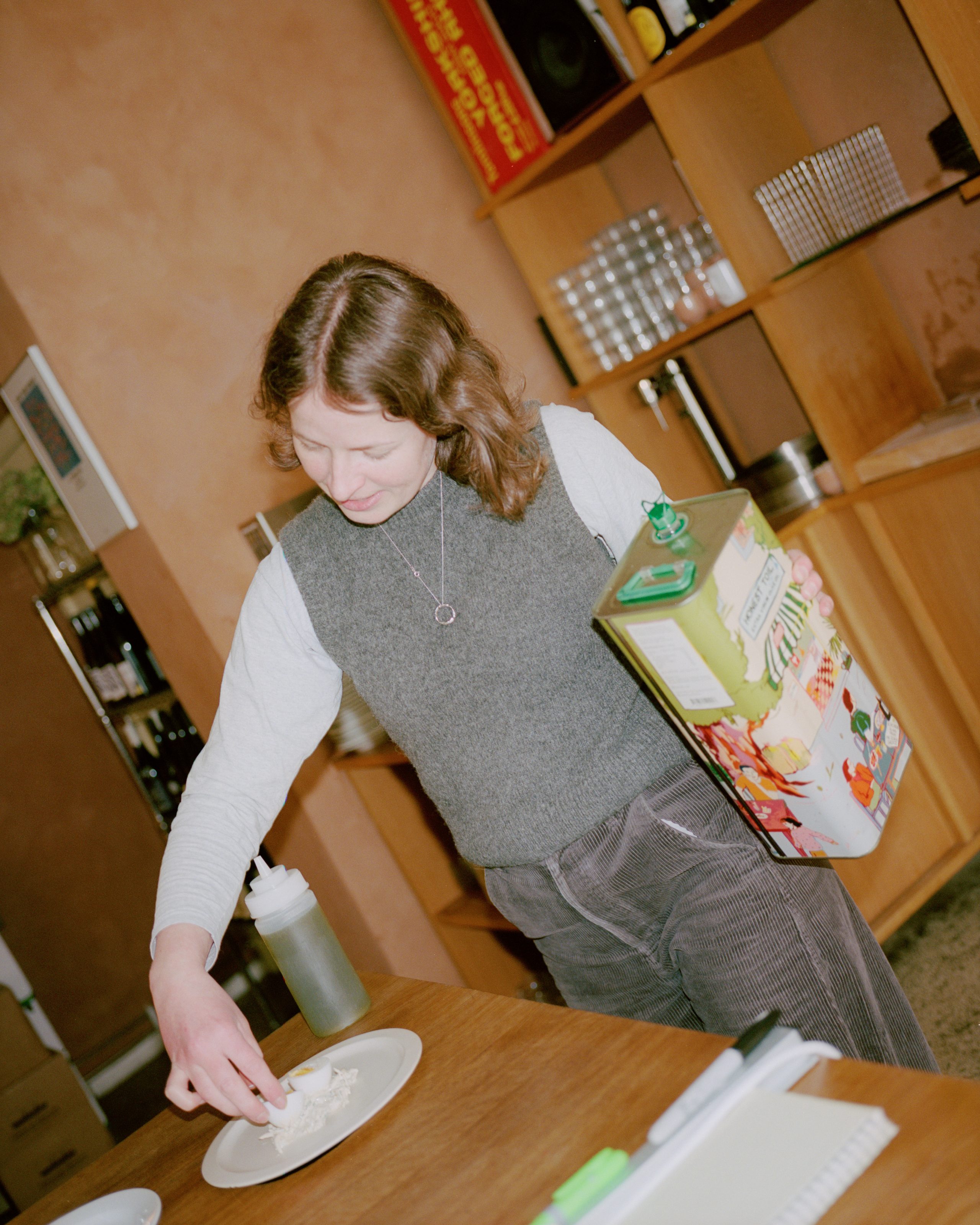
The deli encourages reciprocal hospitality. Third spaces are two-way streets.
Auren’s Deli is the epitome of a third space for many, and it’s wholly connected to the heartbeat of Frederiksberg and Greater Copenhagen. Its atmosphere and service foster a safe, meaningful space, and a critical boundary line. The warmth that emanates from within and the calm, enduring service disarm you. There is no patina of fine-dining mannerisms here. Work and play are decisively separated—a rarity in the industry—and the satisfaction of everyone involved is paramount. “If our staff aren't enjoying it, then we're failing," Henry nods. Both Henry and Pernille care deeply about their guests and staff equally so. “We are [working] our absolute hardest to create a neutral but personable space for whoever walks through these doors,” Henry details further. “The best way of doing that for us is in the service style.”
There is no patina of fine-dining mannerisms here. Work and play are decisively separated—a rarity in the industry—and the satisfaction of everyone involved is paramount.
I myself feel this value intimately during my visits. When I go for tropea onions, I end up with a Rothaus in my hand. It’s an enticing space and, regardless of how I’m feeling, I can’t help but gravitate towards it. And inward I go, snacking on Neal’s Yard Dairy and braised beans with chicory. The allure envelopes me, channeling a humming vibrancy that wraps me up.
We are entering a new era of third spaces, one which straddles the boundaries of multiple domains. And that convergence needs to be handled with aplomb. Henry and Pernille achieve this effortlessly with Auren’s Deli. With their shop a quick stride across the street, they have fostered a model of hospitality rooted in connection. In a contemporary moment defined by pervasive isolation, Auren’s Deli shows us we need spaces with enveloping warmth and nurturing of ardent collectivism.
LATEST STORIES
Our collection of digital stories highlighting the food & beverage community, beyond the coverage of our printed issues.